Cars are among the most recycled consumer products. When a vehicle reaches the end of its life, it can still supply reusable parts and large amounts of metal. Here's a general look at how that works.
1. Arrival and paperwork
When a vehicle arrives at a recycling yard, it's checked in and the ownership paperwork is recorded. Proper documentation helps make sure vehicles are sold legally by their owners.
2. Removing fluids and hazardous materials
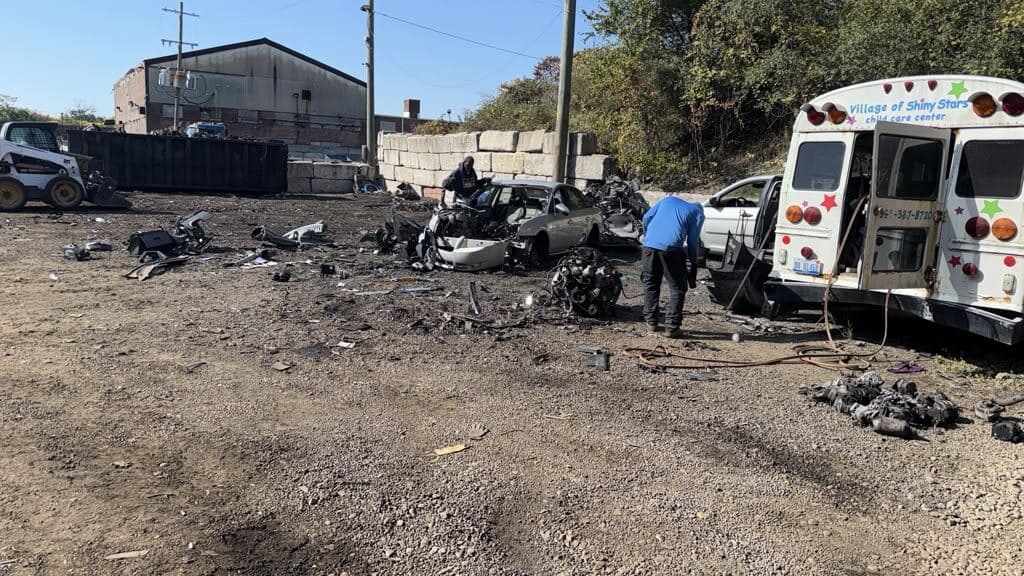
Vehicles contain fuel, motor oil, transmission fluid, coolant, brake fluid, and refrigerant, along with a lead-acid battery. These are removed and handled separately so they don't end up in soil or water. Tires are also typically removed for separate handling.
3. Reusable parts
Depending on the vehicle, components such as engines, transmissions, alternators, body panels, and wheels may be reused or remanufactured. Reusing a part avoids the energy and materials needed to make a new one.
4. Scrap metal
What remains is mostly metal. The vehicle body is typically crushed for transport and then shredded at a processing facility, where steel, aluminum, and other materials are separated so they can be melted down and used again.
Why it matters
- Recycled steel and aluminum reduce the need for newly mined raw materials.
- Removing fluids properly protects local soil and waterways.
- Clearing out abandoned or unused vehicles frees up space in driveways and neighborhoods.
Selling your junk car to a recycler, rather than leaving it to sit, puts those materials back to use.
Ready to sell your junk car?
Call (313) 977-1219 or request an offer online.